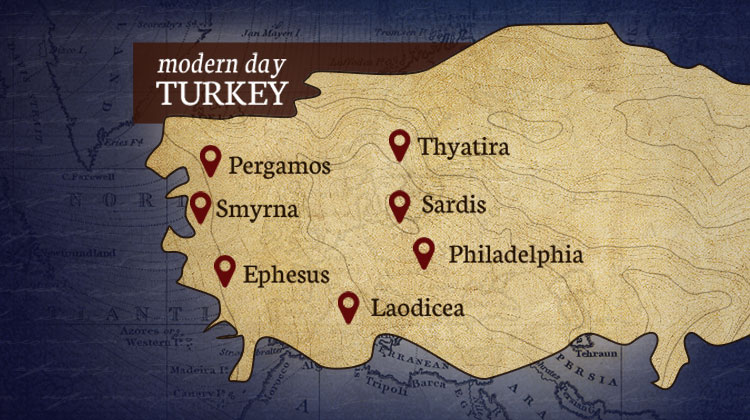
The Seven Churches of Asia in Revelation Explained
The book of Revelation is one of the most misunderstood books of the Bible. Many people immediately think about the end times, the beast, the mark of the beast, the seals, and the final judgment. However, before Jesus reveals future events, He first reveals something very important: the condition of His church. The first three chapters of Revelation contain a message from Jesus Christ Himself to seven churches located in Asia Minor. These churches were real congregations in the first century, but their spiritual conditions represent challenges that churches and believers continue to face throughout history.
John begins the book by writing, “John to the seven churches which are in Asia: Grace be unto you, and peace, from him which is, and which was, and which is to come” (Revelation 1:4 KJV). The message comes from Jesus Christ, the Head of the Church. He is pictured walking among the seven golden candlesticks, showing that He is not distant from His people. He knows their works, their struggles, their faithfulness, and even their hidden weaknesses.
Each church received a personal message from Christ. He praised what was good, corrected what was wrong, warned them of danger, and gave promises to those who would overcome. These messages show us that Jesus is not only concerned with what a church appears to be outwardly, but with what it truly is spiritually.
Ephesus: The Church That Lost Its First Love
The first church Jesus addressed was Ephesus. This was an important city known for trade, culture, and the worship of false gods. The church in Ephesus was a strong church. They worked hard, defended sound doctrine, rejected false teachers, and patiently endured difficulties. Jesus said, “I know thy works, and thy labour, and thy patience, and how thou canst not bear them which are evil” (Revelation 2:2 KJV).
From an outward perspective, Ephesus looked like an excellent church. They were active. They were doctrinally careful. They had strong convictions. But Jesus saw a deeper problem: “Nevertheless I have somewhat against thee, because thou hast left thy first love” (Revelation 2:4 KJV).
Their greatest problem was not that they stopped working for Christ. Their problem was that they stopped loving Christ as they once did. They still served, but the passion was gone. They still believed the truth, but their hearts had grown cold.
Jesus commanded them, “Remember therefore from whence thou art fallen, and repent, and do the first works” (Revelation 2:5 KJV). The solution was to remember where they started, repent, and return to their first love.
This message speaks strongly to churches today. It is possible to continue preaching, singing, serving, and attending church while slowly losing the joy and affection we once had for Christ. Jesus does not only want our activity; He wants our hearts.
Smyrna: The Faithful Church That Suffered
The second church was Smyrna. Unlike Ephesus, Smyrna received no rebuke from Jesus. This was a church that suffered greatly because of their faithfulness. They experienced persecution, rejection, and poverty. Yet Jesus told them, “I know thy works, and tribulation, and poverty, (but thou art rich)” (Revelation 2:9 KJV).
The world saw them as poor, but heaven saw them as rich. They did not have earthly wealth, but they possessed something greater: faithfulness to Christ.
Jesus encouraged them, saying, “Fear none of those things which thou shalt suffer” (Revelation 2:10 KJV). He did not promise that they would avoid suffering. Instead, He promised to be with them through suffering.
He continued, “Be thou faithful unto death, and I will give thee a crown of life” (Revelation 2:10 KJV). The lesson from Smyrna is that suffering does not mean God has abandoned His people. Sometimes the most faithful believers are the ones who endure the greatest trials.
Pergamos: The Church That Compromised
The third church was Pergamos. Jesus described it as the place “where Satan’s seat is” (Revelation 2:13 KJV). This city was deeply involved in idol worship and emperor worship. Despite living in such a hostile environment, the believers in Pergamos held onto the name of Christ.
Jesus said, “Thou holdest fast my name, and hast not denied my faith” (Revelation 2:13 KJV). They had remained faithful, but they had allowed compromise to enter the church.
Jesus warned them because some held to false teachings. He compared this to the error of Balaam, who led Israel into sin by mixing God’s people with ungodly practices.
The danger of Pergamos was not open rejection of Christianity. Their danger was trying to combine Christianity with the values of the world.
Many churches today face the same temptation. The pressure to become accepted by society can cause believers to weaken biblical convictions. Jesus calls His church to love people, but never to compromise truth.
Thyatira: The Church That Tolerated Error
The fourth church was Thyatira. Jesus recognized their good qualities: “I know thy works, and charity, and service, and faith, and thy patience” (Revelation 2:19 KJV). They were a loving and active church.
However, Jesus had something against them. They tolerated false teaching and allowed corruption to influence the church. He said, “Because thou sufferest that woman Jezebel” (Revelation 2:20 KJV).
Their problem was not a lack of love. Their problem was that their love was not guided by truth.
This teaches an important lesson: biblical love does not mean accepting everything. True love protects people from error. A faithful church must have both compassion and conviction.
Sardis: The Church That Looked Alive but Was Dead
The fifth church was Sardis. This church had a reputation. People probably viewed them as successful and spiritual. But Jesus saw something different.
He said, “Thou hast a name that thou livest, and art dead” (Revelation 3:1 KJV).
Sardis teaches us that appearance does not equal spiritual life. A church can have programs, activities, a good reputation, and outward success, yet be spiritually weak.
Jesus commanded them, “Be watchful, and strengthen the things which remain” (Revelation 3:2 KJV).
The greatest danger is not always persecution. Sometimes the greatest danger is spiritual sleep. A church can become comfortable and continue outward activity while losing its dependence on God.
Philadelphia: The Faithful Church With Little Strength
The sixth church was Philadelphia. This was a small church, but Jesus spoke highly of them. He said, “Thou hast a little strength, and hast kept my word, and hast not denied my name” (Revelation 3:8 KJV).
They were not impressive according to human standards. They did not have great power or influence. But they were faithful.
Jesus promised them, “I have set before thee an open door, and no man can shut it” (Revelation 3:8 KJV).
This reminds us that God does not measure success the way the world does. A small church that remains faithful to Christ is precious in His sight.
Laodicea: The Lukewarm Church
The final church was Laodicea. This was a wealthy and comfortable city. The people had resources, influence, and confidence. But spiritually they were in danger.
Jesus said, “Because thou sayest, I am rich, and increased with goods, and have need of nothing” (Revelation 3:17 KJV). Their greatest problem was that they believed they were spiritually fine when they were actually far from God.
Jesus described them as “wretched, and miserable, and poor, and blind, and naked” (Revelation 3:17 KJV).
Their issue was not persecution or false doctrine. Their issue was spiritual indifference. They had become comfortable without depending on Christ.
Jesus gave them a powerful invitation: “Behold, I stand at the door, and knock” (Revelation 3:20 KJV).
This message was given to a church. It shows that a church can have religious activity while losing close fellowship with Jesus.
The Message of the Seven Churches Today
The seven churches reveal seven conditions that can affect any church.
Ephesus warns us about serving without love. Smyrna teaches us faithfulness during suffering. Pergamos warns against compromise with the world. Thyatira warns against tolerating false teaching. Sardis warns against having a reputation without spiritual life. Philadelphia encourages believers to remain faithful even with little strength. Laodicea warns against becoming comfortable and lukewarm.
At the end of every message Jesus says, “He that hath an ear, let him hear what the Spirit saith unto the churches” (Revelation 2:7 KJV).
The message is not only for ancient churches. It is for every generation.
Jesus still walks among His churches. He still sees the heart behind the activity. He still calls His people to repentance, faithfulness, love, holiness, and complete devotion to Him.
The greatest question is not only, “What kind of church do we attend?” The greater question is, “What does Jesus see when He looks at His church?”


No comments yet. Be the first to share your thoughts!