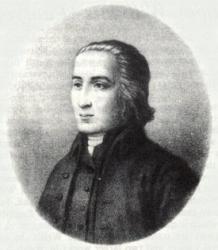
About William Williams
William Williams (1717–1791), widely revered as the "Sweet Singer of Wales" and the "Watts of Wales," was the quintessential hymn writer of the Welsh Methodist revival. Born at Cefn-y-coed in the parish of Llanfair-y-bryn, near Llandovery, Carmarthenshire, Williams originally trained for a career in medicine. However, his life took a profound spiritual turn when he abandoned his medical studies to pursue theology. He was ordained as a deacon in the Church of England in 1740 by Dr. Claget, the Bishop of St. Davids, and went on to serve the curacies of Llan-wrtyd and Llanddewi-Abergwesyn for three years.
Preaching and the Methodist Revival
Williams's evangelical convictions eventually brought him into conflict with the established church authorities. He was refused priest's orders due to his revivalist activities and close association with early Methodist leaders like Daniel Rowlands. Consequently, Williams fully aligned himself with the Calvinistic Methodists. For the next half a century, he traveled extensively across both North and South Wales as an itinerant preacher, commanding immense respect and drawing massive crowds. His deep commitment to the spiritual renewal of his homeland earned him an enduring legacy as one of the most vital religious figures in the principality.
Literary Contributions and English Hymnals
While Williams wrote the vast majority of his poetry and prose in his native Welsh tongue, he was determined to share his theological expressions with English congregations. He published two major collections written primarily in English, which were later collected and reprinted by the hymnologist Daniel Sedgwick.
Hosannah to the Son of David (1759)
Printed by John Grabham in Bristol, this volume contains 51 hymns. While 11 of these selections were translated directly from his original Welsh texts, the majority were brand new English compositions focusing on the themes of divine redemption and communion with God.
Gloria in Excelsis (1772)
Printed by John Ross in Carmarthen, this collection added 70 multi-part hymns to his English repertoire. These pieces heavily emphasized the passion of Christ, divine guidance, and Christ's absolute sovereignty as King.
Major Hymnological Works
The vast catalog of Williams's work laid the foundation for modern Welsh congregational singing. Despite his prolific output of hundreds of hymns, his international fame rests primarily on two powerful pieces that remain staples of Christian worship worldwide.
| Hymn Title / Common Incipit | Primary Theme | Source Collection | Modern Significance |
| Guide Me, O Thou Great Jehovah | Divine guidance, spiritual pilgrimage, and reliance on God through life's desert. | Y Môr o Wydr (Welsh), Hosannah (English) | Appears in over 1,500 modern hymnals; universally recognized as the unofficial national anthem of Welsh rugby. |
| O'er Those Gloomy Hills of Darkness | Missionary zeal, the spread of the gospel, and the enlightenment of nations. | Gloria in Excelsis, 1772 | Maintained across hundreds of historical and modern missions-focused collections. |
| Beneath Thy Cross I Lay Me Down | Contemplation of the crucifixion, Passiontide reflection, and personal surrender. | Gloria in Excelsis, 1772 | Frequently utilized during Holy Week services across various denominations. |
| Jesus, Lead Us With Thy Power | Prayer for strength, protection from temptation, and perseverance. | Gloria in Excelsis, 1772 | Also published and sung under the alternative title "Father, Lead Us With Thy Power." |
Death and Enduring Impact
William Williams died on January 11, 1791, at his home in Pantycelyn, the estate from which he took his famous title. His hymns continue to cross linguistic boundaries, finding a home in dozens of modern languages ranging from Spanish and German to Swahili, Chinese, and Cherokee. By wedding the fiery passion of the Methodist revival with the poetic beauty of the Welsh language, Williams gave a permanent voice to the spiritual landscape of his nation.