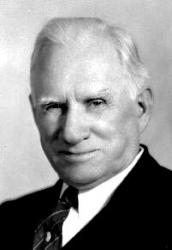
About William R. Newell
William Reed Newell (1868–1956) was an American pastor, Bible teacher, and theologian who became an influential leader within the early twentieth-century Bible institute movement. Born in Savannah, Ohio, on May 22, 1868, Newell pursued a rigorous academic track, earning degrees from the College of Wooster, Princeton Theological Seminary, and Oberlin Theological Seminary. His exceptional teaching abilities caught the attention of the Moody Bible Institute in Chicago, where he was appointed Assistant Superintendent under R. A. Torrey. In this role, Newell established massive city-wide Bible classes that attracted thousands of students weekly across Chicago, St. Louis, and Detroit, cementing his reputation as a premier expositor of Scripture. Later in life, he focused heavily on writing comprehensive, widely read theological commentaries, particularly on the books of Romans, Galatians, and Revelation. He passed away on April 1, 1956, in Florida.
The Backstory of "At Calvary"
Newell’s enduring contribution to hymnology happened almost completely by accident. In 1895, while heading to teach a class at the Moody Bible Institute, a sudden rush of poetic inspiration came over him regarding the sheer scale of divine grace. Seeking a quiet space to capture the words before they faded, he slipped into an empty classroom, pulled a discarded envelope from his pocket, and hurriedly scribbled down the text that would become his masterwork.
Shortly after writing it, he handed the slip of paper to Daniel Towner, the director of the music department at the institute. Towner sat down at a piano, composed a driving, memorable melody for the verses, and the resulting hymn was published later that same year.
Lyrical Focus and Thematic Contribution
Newell’s writing directly mirrored the theological hallmarks of the early Moody revival movement: a heavy emphasis on the transformative power of the cross, the unmerited nature of grace, and a clear contrast between a past life of spiritual indifference and a present life of redemption. His lyrics are deeply personal, often utilizing first-person pronouns to create an intimate, autobiographical narrative that singing congregations could immediately adopt as their own testimony.
The Mechanics of the Text
The structural brilliance of Newell's writing lies in its narrative arc. It begins by exposing human pride and vanity, moves abruptly to the sudden realization of spiritual danger at the cross, and culminates in a triumphant celebration of absolute pardon and liberty.
Summary of Core Hymnological Contributions
| Hymn Title / Common Incipit | Primary Theological and Narrative Focus | Historical and Global Impact |
| Years I spent in vanity and pride (At Calvary) | Personal conversion, conviction of sin, and the freeing power of Christ's sacrifice. | His definitive masterpiece; published in over 210 major English hymnals and translated globally into Spanish (Años mi alma en vanidad vivió), Swedish, French, Polish, German, Arabic, and Tagalog. |
| O the love that drew salvation's plan | The vast scope of divine grace, eternal security, and praise. | Maintained a steady presence in early to mid-century evangelistic campaign songbooks. |
| At God's right hand my Savior stands | The ongoing, heavenly intercession of Christ and the believer's security. | Frequently utilized within specialized Bible conference song collections. |
A Borderless Message of Grace
William R. Newell's hymnody succeeded because it took complex theological concepts of justification and grace and rendered them instantly accessible to the common person. By capturing his personal awe on the back of an envelope, he created an anthem of redemption that successfully leaped across cultural and linguistic barriers. Today, from historic American camp meetings to contemporary congregations singing in Swahili, Spanish, and Portuguese, his words continue to serve as a vibrant, living witness to the message of Calvary.