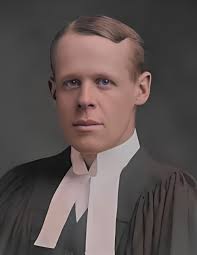
About William Paton MacKay
Dr. William Paton Mackay (1839–1885) was a Scottish physician, Presbyterian minister, and hymn writer whose life journey uniquely combined the precision of medical science with the spiritual passion of nineteenth-century revivalism. Born in Montrose, Scotland, on May 13, 1839, Mackay pursued an advanced education at the University of Edinburgh, where he successfully graduated with a degree in medicine. He practiced as a dedicated physician for a number of years, but a profound deepening of his spiritual convictions eventually led him to leave the medical profession to enter the Christian ministry.
In 1868, Mackay was ordained and accepted a call to become the minister of Prospect Street Presbyterian Church in Hull, England. That same year, he married Mary Loughton Livingstone, and together they served the Hull community for nearly two decades. Mackay became a highly respected pastoral voice, recognized for his earnest preaching and his active support of evangelical revival movements. Tragically, his life and ministry were cut short when he suffered a fatal accident at Portree, Scotland, passing away on August 22, 1885, at the age of forty-six.
The 1872 Praise Book and Creative Legacy
Mackay possessed a natural gift for poetic composition, using his verses as tool to stir congregations toward deeper worship and personal revival. His primary contribution to hymnology came through his collaboration with the Reverend William Reid. In 1872, seventeen of Mackay's original hymns were chosen for publication in Reid’s highly influential compilation, The Praise Book.
His writing style was characterized by an intense focus on the substitutionary atonement of Christ, joyful gratitude, and passionate prayers for spiritual awakening. Because his lyrics were simple, rhythmically driving, and deeply emotional, they became favorites not only in traditional Scottish Presbyterian worship but also within the global camp-meeting and revival circuits.
                    ┌───────────────────────────────────────┐
                    │       MACKAY'S REVIVAL LYRIC CORES    │
                    └───────────────────┬───────────────────┘
                                        │
         ┌──────────────────────────────┴──────────────────────────────┐
         ▼                                                             ▼
    CONGREGATIONAL PRAISE                                         SPIRITUAL REVIVAL
    • Bold, direct focus on thanksgiving                           • Urgent prayers for divine awakening
    • Simple, accessible vocabulary                               • Centered on the power of the Holy Spirit
    • Designed for immediate group singing                         • Focused on personal and corporate renewal
"Revive Us Again" — A Monumental Global Anthem
While Mackay composed dozens of hymns, his name is permanently secured in global church history by a single, monumental work that became one of the most famous pieces of Christian hymnody ever produced.
The Standard of Revival: "We Praise Thee, O God, for the Son of Thy Love"
Written in 1863 and beautifully recast into its final format in 1867, this hymn is known universally by its triumphant, soaring refrain: "Revive us again; fill each heart with Thy love."
   THE REVIVAL REFRAIN: "REVIVE US AGAIN"
   ┌──────────────────────────────────────────────────────────────────┐
   │ Chorus: Hallelujah! Thine the glory;                             │
   │         Hallelujah! Amen;                                        │
   │         Hallelujah! Thine the glory;                             │
   │         Revive us again.                                         │
   └──────────────────────────────────────────────────────────────────┘
The song achieved a staggering level of global longevity and distribution, finding a home in nearly 1,300 distinct hymnals worldwide. Its stanzas move seamlessly from praising God for the gift of Christ to calling down the fire of the Holy Spirit to re-kindle the faith of the church. It became the signature anthem for the great global revival campaigns of the late nineteenth and twentieth centuries.
Summary of Core Hymnological Contributions
| Hymn Title / Common Incipit | Liturgical and Thematic Focus | First Major Publication | Modern Global Footprint |
| We praise Thee, O God! for the Son of Thy love (Revive Us Again) | Thanksgiving, redemption, and spiritual awakening. | Written 1863; Revised 1867 | Appears in over 1,290 hymnals; translated globally into Spanish, German, Portuguese, Russian, and Swahili. |
| "Look unto Me, and be ye saved!" | Evangelism, Christ's invitation, and faith. | The Praise Book, 1872 | Maintained a steady presence in historical evangelistic campaigns. |
| When we reach our Father's dwelling | Eternal security, heaven, and final peace. | The Praise Book, 1872 | Chosen regularly for devotional and memorial collections. |
| The Lord is risen; and death's dark judgment flood | Easter triumph and victory over judgment. | Revival Songbooks | Celebrated for its rich, Old Testament typological imagery. |
An Enduring Heritage of Awakening
Dr. William Paton Mackay’s life was an example of a total devotion to healing—moving seamlessly from mending the physical ailments of the human body to addressing the deeper, spiritual needs of the human soul. His decision to exchange the doctor's stethoscope for the pastor's pulpit allowed him to supply the church with a vibrant vocabulary of hope.
Though his voice was suddenly silenced by a tragic accident in 1885, his musical legacy remains wonderfully active. Every single week, whenever a congregation stands to sing his timeless plea for spiritual renewal and lifts the familiar shout of "Hallelujah! Thine the glory," the physician-pastor from Montrose continues to lead the global church in its ongoing prayer to be revived again.