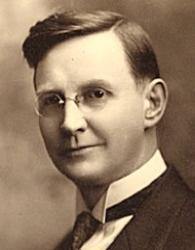
About William M. Runyan
William Marion Runyan (1870–1957) was an American composer, Methodist minister, and music editor whose melodies left an indelible mark on twentieth-century congregational singing. Born in Marion, New York, on January 21, 1870, Runyan displayed exceptional musical talent at a very early age. By the time he was twelve years old, his proficiency on the organ allowed him to serve regularly as a substitute church organist. This early immersion in church music laid a firm foundation for a lifelong career dedicated to sacred music and Christian ministry.
In 1891, Runyan was ordained as a Methodist minister and spent the initial decade of his ministry serving several congregations across the state of Kansas. His passion for evangelism led him to transition into full-time field work in 1903, laboring under the Central Methodist Conference for the next twenty years. Runyan’s multifaceted career later took him to John Brown University in Sulphur Springs, Arkansas, where he served as the pastor of the Federated Church. He also became an influential literary and musical figure within evangelical circles, editing the Christian Workers Magazine, assisting the Moody Bible Institute, and serving as a prominent editor for the Hope Publishing Company until his retirement in 1948. Runyan spent his final years in Kansas, passing away in Pittsburg, Kansas, on July 29, 1957.
The Partnership with Thomas Chisholm
While Runyan wrote over one hundred original hymn texts and gospel songs, his most significant contribution to church history came through his role as a composer of hymn tunes. He possessed a rare gift for setting devotional poetry to music that was emotionally stirring yet accessible for congregations to sing in harmony. His most famous collaboration occurred with the poet Thomas Chisholm. Runyan frequently took Chisholm's poems and crafted melodies that amplified their theological depth, resulting in hymns that achieved massive global distribution.
The Composition of a Masterpiece
In 1923, Thomas Chisholm sent a collection of poems to Runyan. One particular text celebrating the unchanging faithfulness of God deeply moved the composer. Runyan later recorded that he prayed intensely that his music would accurately reflect the magnificent theme of the lyrics. The resulting tune, named "FAITHFULNESS," became an instant classic.
"Great Is Thy Faithfulness" and Musical Legacy
The hymn "Great Is Thy Faithfulness" stands as a towering achievement in Christian hymnody. Runyan’s composition perfectly balances a gentle, reassuring verse with a soaring, majestic chorus that allows a congregation to declare their praise with maximum vocal resonance.
       THE CHORUS OF PRAISE: "FAITHFULNESS"
       ┌────────────────────────────────────────────────────────────┐
       │ Chorus: Great is Thy faithfulness! Great is Thy faithfulness!│
       │         Morning by morning new mercies I see;              │
       │         All I have needed Thy hand hath provided—           │
       │         Great is Thy faithfulness, Lord, unto me!          │
       └────────────────────────────────────────────────────────────┘
Initially popularized through its heavy usage at the Moody Bible Institute and later showcased globally by George Beverly Shea at the Billy Graham Evangelistic Crusades, the hymn has been published in hundreds of languages and thousands of hymnals around the world. It remains a standard anthem of comfort during times of personal trial and corporate worship.
Summary of Core Hymnological Contributions
| Hymn Title / Tune Name | Nature of Contribution | Primary Thematic Focus | Lasting Historical Impact |
| Great Is Thy Faithfulness (Tune: FAITHFULNESS) | Composer of the musical setting for Thomas Chisholm's text. | Divine constancy, providence, and the unchanging nature of God. | One of the most widely sung hymns in the global church; translated into dozens of languages. |
| Lord, I Have Shut the Door | Composer and Author of text and music. | Private devotion, prayer, and quiet communion with God. | Highly popular in early twentieth-century devotional and prayer circles. |
| All That My Soul in Its Sin Can Need | Composer of the musical setting (Text by Mrs. W. M. Runyan). | Salvation, grace, and Christ's sufficiency. | Maintained a steady presence in mid-century evangelical gospel songbooks. |
| Can We Know That Jesus Saves Us | Composer and Author of text and music. | Assurance of faith and the witness of the Spirit. | Widely utilized in Methodist and holiness revival meetings throughout the Midwest. |
Voice of Assurance
William M. Runyan’s legacy is defined by his ability to translate profound spiritual truths into singable, memorable melodies. As a pastor, evangelist, and editor, he understood the unique power of music to shape Christian theology and comfort the human heart. Though his editorial work and pastoral ministries were highly valued during his lifetime, it is his musical voice that continues to echo across generations. Every time a congregation lifts its voice to sing of God's morning-by-morning mercies, Runyan’s prayerful composition continues to serve its original purpose, anchoring the hearts of believers in the steadfast love of their Creator.