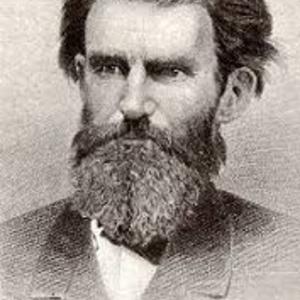
About William Kethe
William Kethe (died c. 1594) was an influential sixteenth-century Marian exile, translator, and hymn writer. Though specific details regarding his early life remain sparse, historical scholars firmly tie his ancestry to Scotland. Kethe achieved prominence during the late 1550s as a steadfast Protestant who fled England to escape the intense religious persecutions under Queen Mary.
His years in exile were marked by constant movement and networking among European reformed communities. He resided in Frankfurt in 1555 and moved to Geneva by 1557. Recognizing his capabilities, his fellow refugees chose him as a trusted messenger in 1558, sending him on important assignments across Basel and Strasbourg to maintain deep organizational links between the disparate groups of English exiles. Following his return to England after the Protestant ascension of Queen Elizabeth I, Kethe served as a chaplain to the Queen's forces under the Earl of Warwick at Newhaven (Havre) in 1563 and during northern campaigns in 1569. He was instituted as Rector of Childe Okeford near Blandford in Dorset around 1561, a pastoral connection he maintained until his death in approximately 1594.
The Geneva Bible and Psalter Contributions
During his residence in Switzerland, Kethe was heavily involved in pioneering Protestant literary projects. Scholars widely recognize him as one of the dedicated translators who labored over the landmark Geneva Bible (1560), a popular translation heavily favored by the Pilgrim Fathers.
The historic Geneva Bible, which Kethe helped translate. Source: Universal History Archive / Universal Images Group via Getty Images
Concurrently, Kethe turned his poetic talents to the metrical versification of the biblical Psalms. He prepared twenty-five individual Psalm versions for the Anglo-Genevan Psalter of 1561. While only nine of his initial versions were pulled directly into the official English Psalter of 1562, the church of his ancestral home embraced his work completely. The Scottish Psalter of 1564-65 adopted all twenty-five of Kethe's versions into its liturgical canon.
                    ┌───────────────────────────────────────┐
                    │      KETHE'S MIGRATION OF PSALMODY    │
                    └───────────────────┬───────────────────┘
                                        │
         ┌──────────────────────────────┴──────────────────────────────┐
         ▼                                                             ▼
   ANGLO-GENEVAN PSALTER (1561)                                  SCOTTISH PSALTER (1564)
   • 25 original metrical versions                               • Adopted all 25 versions completely
   • Characterized by unique meters                              • Fixed Kethe's metrics into local usage
   • Designed for exiled congregations                           • Formed bedrock of national worship
"Old Hundredth" — A Monumental Liturgical Legacy
Because Kethe wrote the vast majority of his verse in highly unique, specific meters, almost all of his versions eventually dropped out of common usage when the church moved toward standardized metric formats in the seventeenth century. However, he authored one monumental exception that became arguably the most famous psalm translation in the history of the English-speaking church.
The Standard of Praise: Psalm 100
Kethe’s legacy was permanently secured by his metrical translation of Psalm 100, beginning with the iconic line: "All people that on earth do dwell." Added to the English Psalter in 1565, this version was set to a majestic melody composed by Louis Bourgeois, famously known as the "Old Hundredth."
   ALL PEOPLE THAT ON EARTH DO DWELL (PSALM 100)
   ┌──────────────────────────────────────────────────────────────────┐
   │ Line 1: All people that on earth do dwell,                       │
   │ Line 2: Sing to the Lord with cheerful voice;                    │
   │ Line 3: Him serve with fear, His praise forth tell,              │
   │ Line 4: Come ye before Him and rejoice.                          │
   └──────────────────────────────────────────────────────────────────┘
The song achieved staggering global longevity. It is the only sixteenth-century English psalm translation to maintain uninterrupted, near-universal usage directly into modern hymnals across all denominations. Its lines are universally celebrated for their simple language, rhythmic precision, and timeless directness.
Summary of Core Hymnological Contributions
| Work / Translation Context | Primary Metrical Focus | First Major Publication | Long-Term Global Status |
|---|---|---|---|
| All people that on earth do dwell | Psalm 100 (Metrical Version) | Anglo-Genevan Psalter, 1561 | Preserved across more than 560 major hymnals; translated globally into languages including Chinese and Spanish. |
| My soul, praise the Lord | Psalm 104 (Metrical Version) | Anglo-Genevan Psalter, 1561 | Maintained a specialized presence in modern hymnals in highly altered formats. |
| Anglo-Genevan Psalter | 25 distinct Psalm versions (including 27, 47, 90, 122) | Collected Edition, 1561 | Formed the foundational spine of early Scottish Presbyterian liturgical identity. |
| The Geneva Bible | Textual Translation Team | Geneva Edition, 1560 | Shaped early American Puritan culture as the primary Bible of the New England colonies. |
An Unbroken Voice Across Centuries
William Kethe’s life perfectly represented the resilience of the sixteenth-century reformation spirit. Forced into European exile by changing political winds, he utilized his displacement to forge deep connections and construct the foundational scriptures and songs that would steer generations of global worshippers.
While the location of his physical resting place in Dorset remains unrecorded due to lost parish archives, his spiritual monument remains beautifully alive. Every single week, when congregations across the globe stand to sing out his opening lines to the majestic strains of the Old Hundredth, the Scottish divine continues to fulfill his own historic instruction, leading all people that on earth do dwell in a common chorus of praise.