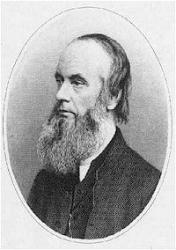
About Henry Alford
Henry Alford (1810–1871) was a towering figure in the 19th-century Church of England, best known as a brilliant scholar, a versatile man of letters, and the influential Dean of Canterbury. Educated at Trinity College, Cambridge, Alford was a true polymath whose contributions spanned theology, philology, poetry, and music. Despite his many administrative duties, his "noblest undertaking" was a monumental edition of the Greek New Testament, a project that occupied twenty years of his life and set a new standard for biblical scholarship in the English-speaking world.
In the realm of hymnology, Alford is remembered for several robust, "evangelical" hymns that have become staples of the Anglican and broader Protestant traditions. While critics like John Julian noted that his poetry was sometimes "conventional," his gift for rhythm and theological clarity ensured his work's longevity. His most enduring contributions include:
-
"Come, ye thankful people, come": Arguably the most famous harvest hymn in the English language, celebrated for its imagery of the "earthly harvest" leading to the "heavenly harvest" at the end of the age.
-
"Forward! be our watchword": A stirring processional hymn written later in his life, intended to inspire a sense of progress and spiritual momentum within the church.
-
"Ten thousand times ten thousand": A vivid and majestic vision of the heavenly host, often sung at All Saints' Day or memorial services.
-
"In token that thou shalt not fear": A standard hymn for the Rite of Baptism, emphasizing the "sign of the cross" as a mark of lifelong commitment.
Alford was also a dedicated compiler, publishing Psalms and Hymns (1844) and the Year of Praise (1867), the latter containing many of his original compositions for specific Sundays and festivals of the liturgical year. His work reflected his position as a "Broad Churchman"—someone who sought to balance traditional liturgical forms with a deep, personal evangelical piety.
Beyond his writing, Alford was a talented artist and musician, known for his skill in wood carving and his ability to play various instruments. He died at Canterbury in 1871, leaving a legacy of intellectual rigor and liturgical beauty. His hymns continue to be valued not just for their musicality, but for their ability to articulate the shared hope and duty of the Christian community.
Key Works and Timeline
-
1832-1851: Early career as a Fellow of Trinity and Vicar of Wymeswold; published early poetical works and hymn collections.
-
1849-1861: Major labor on the four-volume Greek Testament.
-
1857-1871: Tenure as Dean of Canterbury, during which he became a leading voice in British religious life.
-
1867: Published Year of Praise, a collection of 326 hymns designed for the English cathedral service.